The Time is Now to uncover the truth about eating disorders. Common myths and misinformation create harmful barriers, preventing many from recognizing that they—or someone they know—may be at risk.
To combat these misconceptions, NEDA has created a series of images highlighting key facts about eating disorders, which I have included below. If you or someone you know may be at risk, I strongly encourage you to use NEDA’s online screening tool, available on my resources page, as a first step toward awareness and support.
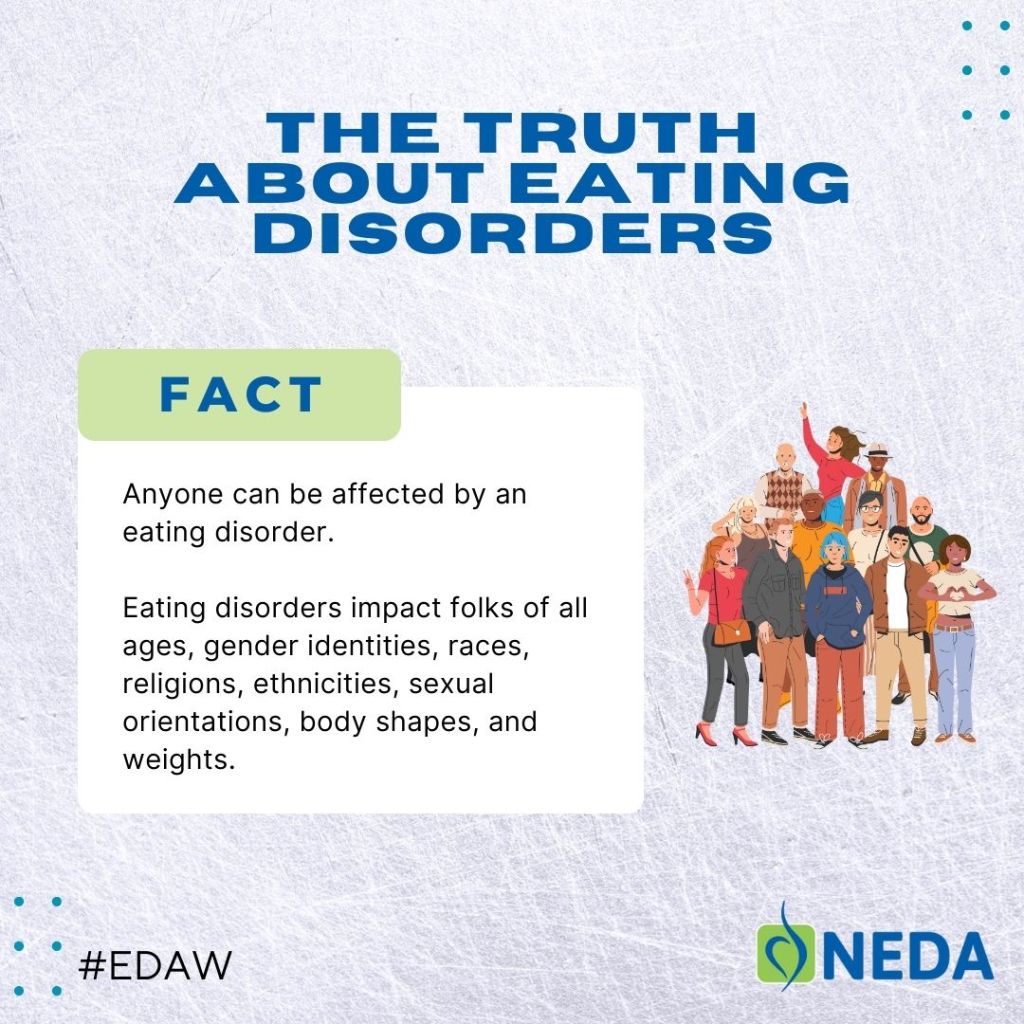
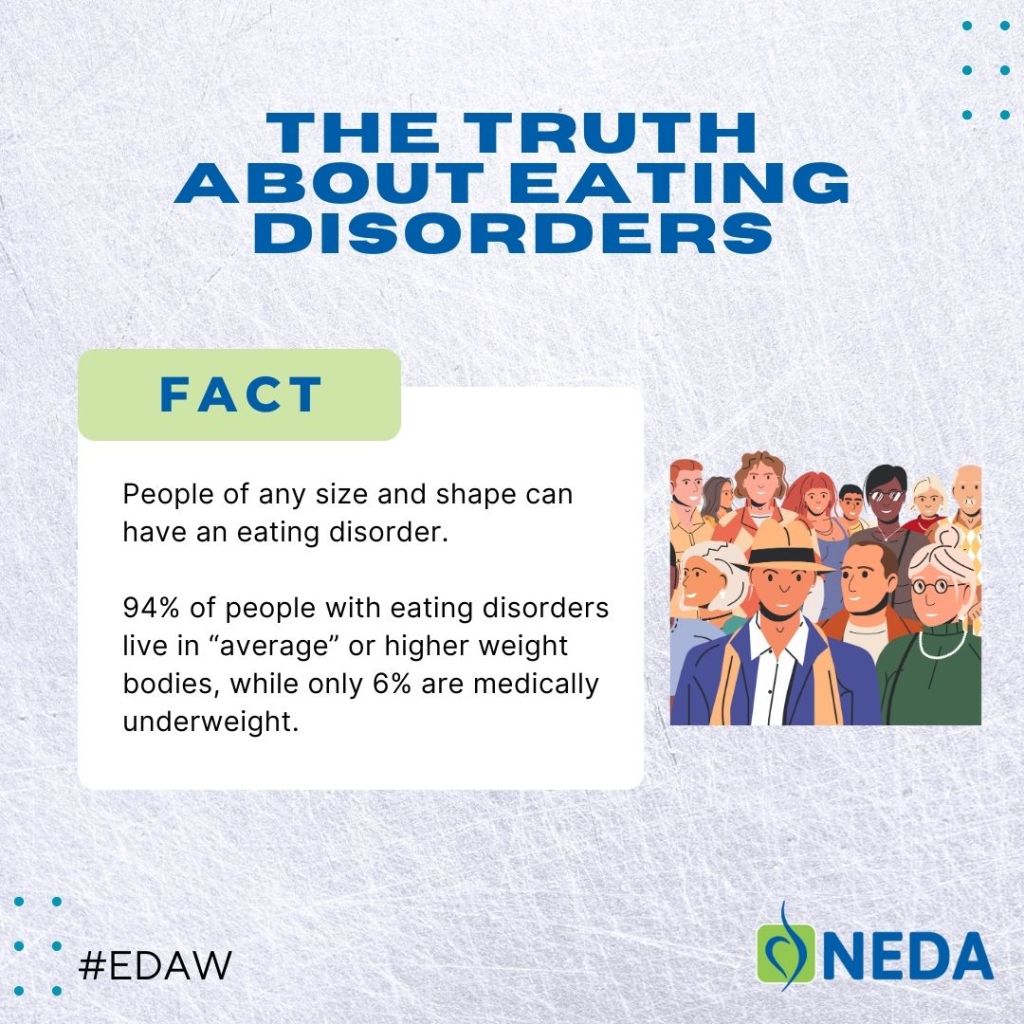
Eating disorders can affect anyone—regardless of age, gender identity, race, religion, ethnicity, sexual orientation, body shape, or weight. Research shows that 94% of individuals with eating disorders live in “average” or higher-weight bodies, while only 6% are medically underweight.
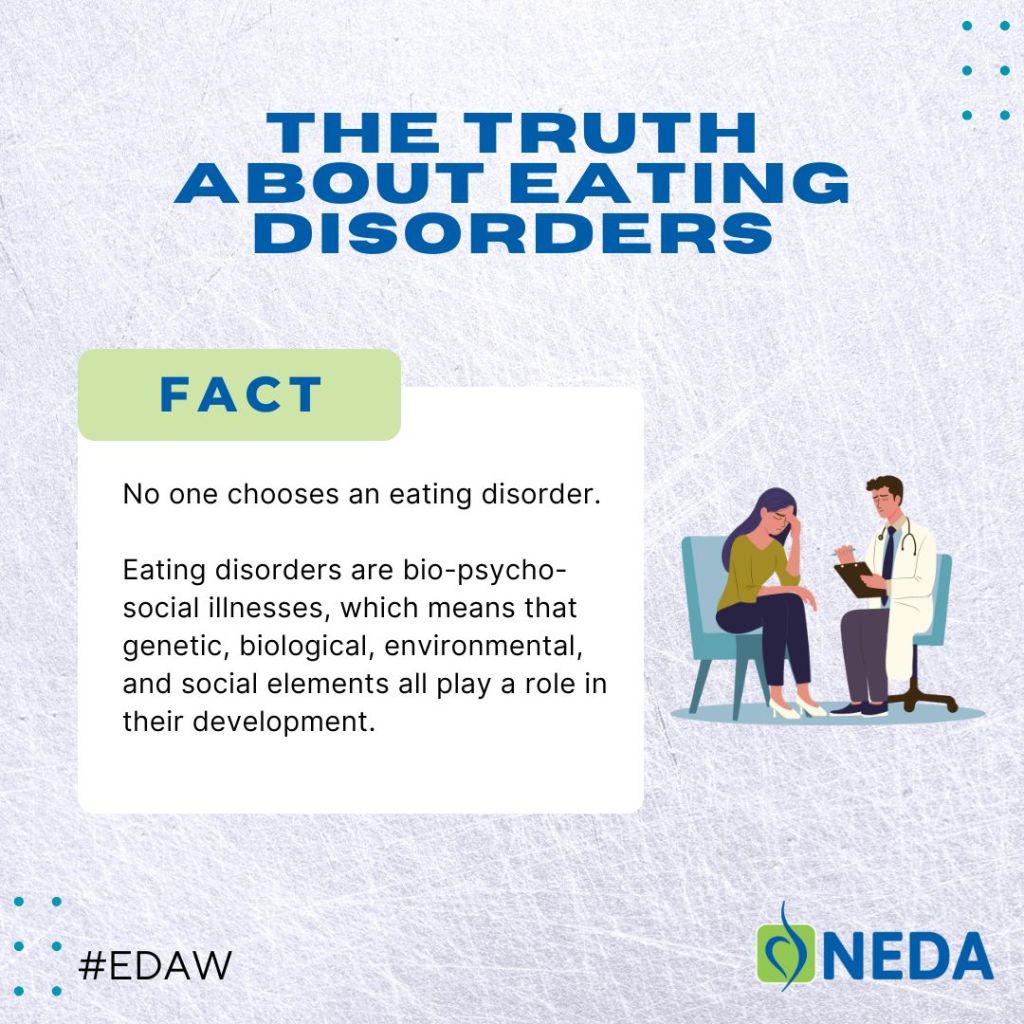
Despite persistent stereotypes, no one intentionally develops an eating disorder. These are bio-psycho-social illnesses, shaped by a complex interplay of genetic, biological, environmental, and social factors. While individual choices may interact with these influences and contribute to certain risks, they do not cause eating disorders.
This is why early intervention is critical—the sooner we recognize the warning signs, the greater the chances of recovery. Much like realizing your credit card is missing, the earlier you catch it, the less damage is done from an unintended mistake. Recognizing the signs of an eating disorder early can make a profound difference in the ability to heal.
 Beyond The Menu
Leave a comment